Drilling a child with the exact same flashcard 100 times does not actually teach their brain to read that word faster in a real book. While reading instruction often defaults to raw repetition, cognitive science reveals that Readle and other advanced training platforms must prioritize contextual diversity to build genuine reading speed. The landmark 2006 Adelman study demonstrated that the number of distinct contexts in which a word appears—not just how frequently it is seen—is the primary driver of word-naming and lexical decision times. For the orthographic processor to achieve true automaticity, readers must encounter words across varied visual formats, semantic uses, and sentence structures to ensure the brain does not simply memorize a single static image.
The frequency illusion: What traditional rote practice gets wrong
Most home interventions for reading struggle with the "frequency illusion." This is the belief that showing a child a standard index card with high-frequency words like "the" or "said" repeatedly will eventually hard-code that word into their long-term memory. In our analysis of cognitive training protocols, we find that this method often builds a highly localized memory for the physical card itself rather than a flexible, automatic recognition of the word. When the child sees that same word in a different font, on a different background, or tucked inside a dense paragraph, the recognition speed drops because the brain has not learned the word; it has learned the "picture" of the flashcard.
This rote approach ignores how the brain actually builds Quick Recall & Comprehension. To the brain’s visual system, a word on a white card is a specific visual object. If the object never changes, the brain has no reason to extract the abstract "orthographic" rules that govern that word's structure. Instead, it relies on low-level visual cues, such as the smudge on the corner of the card or the specific way the "s" is handwritten. This is a fragile form of learning that fails to transfer to the varied environments of actual literature or academic textbooks.
Traditional speed drills also tend to overlook the cognitive fatigue associated with boredom. When the brain encounters the exact same stimulus repeatedly without variation, it undergoes a process called neural adaptation. The neurons responsible for processing that stimulus actually fire less over time, not more. To keep the brain's attention systems engaged, the training environment must introduce enough variety to signal that the information is still "new" and worth processing, even if the core word remains the same.

The contextual diversity effect: What the data actually shows
The most significant shift in our understanding of reading speed came from a 2006 study titled Contextual Diversity, Not Word Frequency, Determines Word-Naming and Lexical Decision Times. Researchers James S. Adelman, Gordon D.A. Brown, and José F. Quesada analyzed large-scale data to determine what actually makes the brain recognize a word faster. For decades, the industry assumed that "frequency"—how often a word appears in the English language—was the king of metrics. Adelman's team proved that "contextual diversity"—how many different documents or environments a word appears in—is a far more accurate predictor of recognition speed.
The Adelman breakthrough
Adelman’s research showed that a word seen 50 times across 50 different books is recognized significantly faster than a word seen 50 times within a single book. This suggests that the human brain is optimized to count "encounters" in different environments as a signal of a word's importance. From an evolutionary perspective, this makes sense. If you see a rare plant in only one specific valley, your brain treats it as a local curiosity. If you see that plant in every forest you visit, your brain prioritizes its recognition as a vital piece of information.
By applying this to Readle, we focus on ensuring that users encounter vocabulary in an ever-shifting digital landscape. When a word appears in different sentence structures and modes, the brain’s lexical decision-making process—the time it takes to decide "yes, I know this word"—shrinks. This is the foundation of building the reading brain, moving the learner From Phonemes To Paragraphs by strengthening the middle layers of automaticity.
Why the orthographic processor needs contrast
The orthographic processor is the part of the brain that recognizes the patterns of letters that form words. This processor requires contrast to refine its definitions. If you only ever see the word "apple" in lowercase Arial font, your processor develops a very narrow definition of what "apple" looks like. Vergara-Martínez et al. (2017) found that the brain’s electrophysiological response—specifically the N400 ERP signature—is influenced by how diverse a word’s previous contexts were.
When the brain sees a word in a new context, it is forced to do a "check" of its existing knowledge. This tiny moment of effort actually strengthens the neural pathway more than a passive, repetitive view. It is the difference between lifting the same 5-pound weight 100 times and navigating an obstacle course. The obstacle course (contextual diversity) builds a more robust, adaptable kind of strength.
| Feature | Static Repetition (Rote) | Contextual Diversity (Adaptive) |
|---|---|---|
| Brain Engagement | Decreases over time (Neural Adaptation) | Maintains high focus (Novelty Signal) |
| Memory Type | Localized/Physical | Abstract/Orthographic |
| Recognition Speed | High for specific card, low for books | High across all reading media |
| Cognitive Load | Low (Leads to "zoning out") | Optimized (Maintains "flow state") |
Visual variety as context: The role of fonts, cases, and presentation
At Readle, we recognize that "context" is not just about the words surrounding a target term; it is also about the visual presentation. This is why our platform utilizes a variety of fonts, sizes, and case options. In Letters Mode and Words Mode, a user might see the word "CAT" in a bold serif font, then "cat" in a light sans-serif, and then "Cat" in a handwritten style.
Pre-lexical vs. visual contributions
Research by Eisenhauer et al. (2019) suggests that context-based facilitation happens at multiple levels of the brain's hierarchy. There are "visual" contributions—how the eye physically tracks the shapes—and "lexical" contributions—how the brain connects those shapes to a known word. By cycling through different visual styles, we prevent the "pre-lexical" system from getting lazy.
If the visual presentation is too consistent, the brain starts to skip the letter-by-letter analysis and relies on the "envelope" or the general shape of the word. While this might seem like it would increase speed, it actually leads to more errors and lower comprehension when the reader encounters similar-looking words (like "house" and "horse"). Diverse visual presentation forces the orthographic processor to confirm the identity of every letter, which paradoxically leads to faster, more accurate recognition in the long run.
The role of typography in neuroplasticity
Using multiple fonts in a digital cognitive training environment acts as a form of "perceptual learning." Each time a user successfully identifies a word in a new font, the brain is essentially performing a tiny generalization task. It is learning that the concept of "A" remains "A" whether it has a tail (serif) or not. This flexibility is what allows an experienced reader to glance at a neon sign, a newspaper, and a text message and process all of them with the same ease.

Semantic diversity: Why meaning accelerates recognition
Context is also semantic—it’s about the "meaning-space" a word occupies. Cevoli et al. (2020) explored what is known as semantic diversity. This is the measure of how many different topics or ideas a word is associated with. Words with high semantic diversity are generally processed faster because they have more "hooks" in the brain’s network of knowledge.
When a word is practiced in only one type of sentence (e.g., "The cat is on the mat"), the brain links the word "cat" specifically to "mat." If the practice sessions instead include "The cat climbed the tree," "My cat is hungry," and "A cat has fur," the word "cat" becomes a central node connected to multiple different concepts. This reduces the cognitive load required for rapid comprehension because the brain has already "pre-activated" the word across several possible scenarios.
This is why Readle focuses on reading for comprehension, not just speed. By pushing for 100% understanding, we ensure that the user isn't just "scanning" symbols but is actually integrating those symbols into a semantic network. This integration is what prevents the common problem of reading a full page and realizing you have no idea what you just read—a phenomenon often caused by an over-reliance on decoding without semantic anchoring.
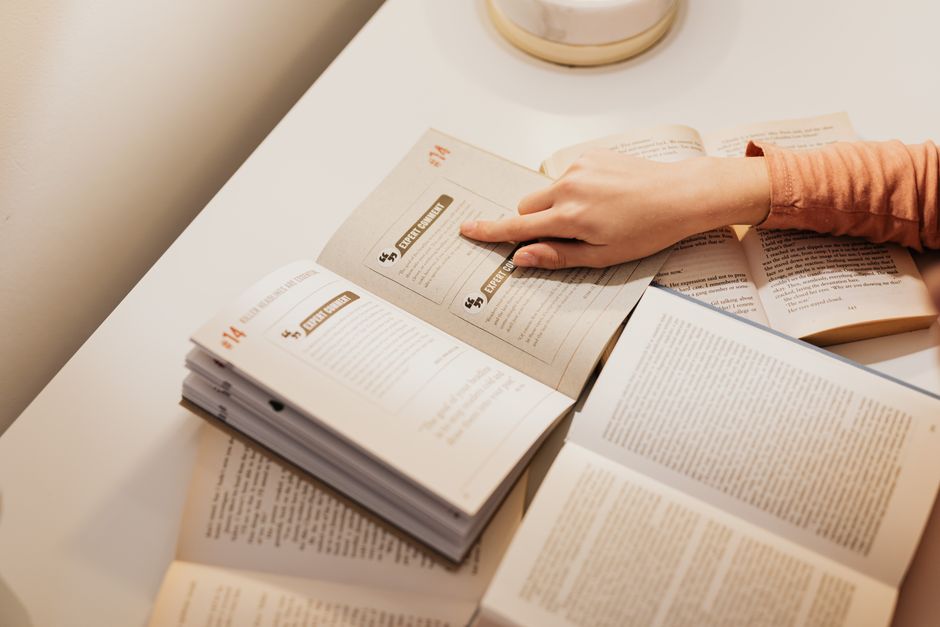
Structuring home practice for maximum variation with Readle
For parents looking to support their children's reading development, moving away from rote drilling requires a intentional shift in how DIY activities are structured. The goal is to mimic the "daily rhythm" of an adaptive digital platform by manually introducing variation.
Adapting DIY flashcards
Instead of using one set of cards, parents should create "Context Packs." If you are practicing 10 high-frequency words, don't just write them on 10 white index cards. Use our guide on Phonological Processing DIY Activities to expand your approach:
- Write the same word on three different colors of paper.
- Use different writing tools: a thick marker, a thin pen, and a crayon.
- Change the case: write one in ALL CAPS, one in lowercase, and one with a Capital Letter.
- Mix the cards with "nonsense" words that look similar to force the brain to pay attention to the specific letter order.
This "interleaved practice" helps the child’s brain realize that the word is the constant, while the environment is the variable. This is the exact principle that makes the Readle algorithm so effective for both children and adults.
Using digital adaptive environments
The difficulty with DIY practice is that it is hard for a human to track exactly when a child has "mastered" a word and which specific visual contexts they still struggle with. This is where a digital cognitive training platform becomes an essential partner. Our platform is designed to be adaptive and personalized, adjusting the complexity and the timing of word presentation based on real-time performance.
In Readle, if a user hesitates on a word presented in a serif font but recognizes it instantly in a sans-serif font, the system recognizes that the orthographic "generalization" isn't quite finished. It will then cycle that word back in more varied formats until the recognition speed is consistent across all visual styles. This level of granular, data-driven practice is nearly impossible to achieve with paper cards alone, which is why we recommend using the platform as the core of a daily brain-training routine.
By prioritizing contextual diversity over raw repetition, we aren't just teaching users to read faster; we are teaching their brains to be more efficient, flexible, and resilient information processors. This shift from "work" to "play" through engaging, varied games ensures that practice remains effective and, more importantly, that the skills built in the app translate perfectly to the real world of books, screens, and life.
Start building automatic word recognition with visually diverse, adaptive practice sessions in Readle's game modes.